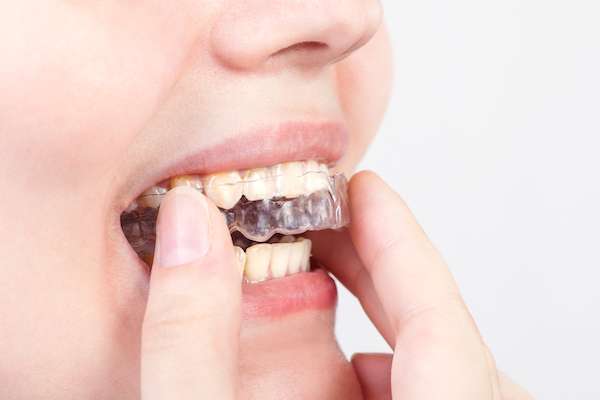
While researching options for teeth straightening, many patients consider the use of clear braces instead of traditional metal braces. There are pros and cons to each option. Before making a decision, learning more about the differences between clear braces options and traditional teeth straightening can help patients decide which route works for their circumstances.
5 questions about clear braces answered
Traditional metal braces are not the only option for teeth straightening for most individuals. Getting clear braces is an option that provides more discretion and is especially popular with teenagers and adults for this reason. Getting the answers to some of the most frequently asked questions can help expedite the decision-making process.
1. What are the different types of clear braces?
Clear braces come in a few different forms. Some are attached and adjusted the same way as traditional braces but are constructed with clear or tooth-colored materials to blend in better with the natural teeth. Other types of clear braces are removable tray systems that are virtually invisible while being worn.
2. What are the benefits of clear braces?
The primary benefit of clear braces over metal braces is a higher level of discretion. Ceramic braces are adjusted and tightened in the same way as traditional braces but are less noticeable, especially from a distance. Tray systems or invisible braces offer further advantages. The plastic aligners are removable while eating or for special events such as a photography session. During everyday wear, they are difficult to spot and nearly invisible from a distance.
3. What are the limitations of wearing clear braces?
Ceramic braces are strong and can withstand the tension required to move the teeth into position but are not quite as strong as metal braces. Clear options can crack or chip, so some dentists recommend metal braces for those who play contact sports or are at risk of being hit in the mouth. Tray systems also have some limitations on what they can effectively treat. Some patients are not good candidates for a tray system due to the type of alignment issue.
4. How are clear braces maintained?
Braces that are tooth-colored or clear have the potential to get stained, so when wearing them it is important to avoid staining foods and beverages. Oral hygiene is important for all types of braces, and clear ones are no exception. Tray systems need to be removed when eating and the teeth must be cleaned before replacing the tray.
5. Why doesn’t everyone get clear braces instead of metal ones?
Metal braces may still be recommended for patients who need major adjustments because metal brackets can apply the most amount of force. Younger patients who may be rough on the braces may also do better with the traditional version. Other considerations include time and budgetary constraints.
Check out what others are saying about our dental services on Yelp: Clear Braces in La Puente, CA.
Conclusion
Getting braces involves a commitment, so it is important for patients to consider all options before moving forward. Those considering clear braces can learn more about the different options by consulting with a dentist to get the answers to further questions.
Request an appointment or call MyDentist La Puente at 626-345-6117 for an appointment in our La Puente office.
Related Posts
Full mouth reconstruction offers a clear path to rebuild a smile, restore function, and raise confidence. When many teeth require care simultaneously, a coordinated plan ensures treatment is organized and predictable. This approach addresses chewing, speech, comfort, and appearance simultaneously, rather than focusing on one tooth at a time. With careful planning and modern materials,…
Restorative dentists try to repair a tooth to save it before considering replacement options. Damage and decay can jeopardize a tooth and affect how the smile looks and functions. However, a restorative dentist can restore a tooth's form and function.A restorative dentist is any dentist who fixes or replaces teeth. This differs from cosmetic dentistry…
A restorative dentist is also known as a general or family dentist. Their main priority is to help you maintain optimal oral health. Sometimes, this means restoring or replacing damaged or missing teeth.Restorative dentists repair or replace damaged teeth through various methods. Of course, they try to prevent the need for extensive procedures or the…